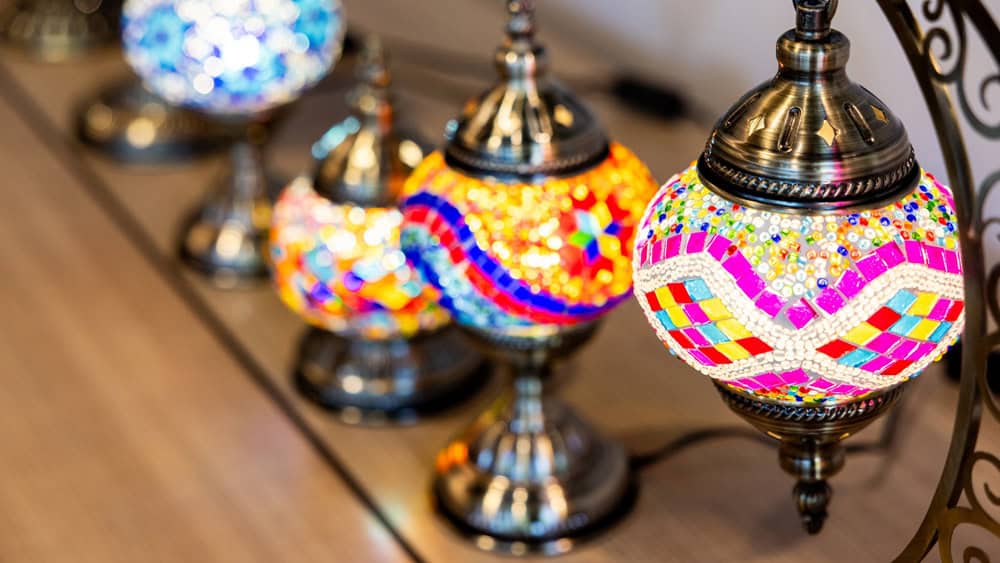
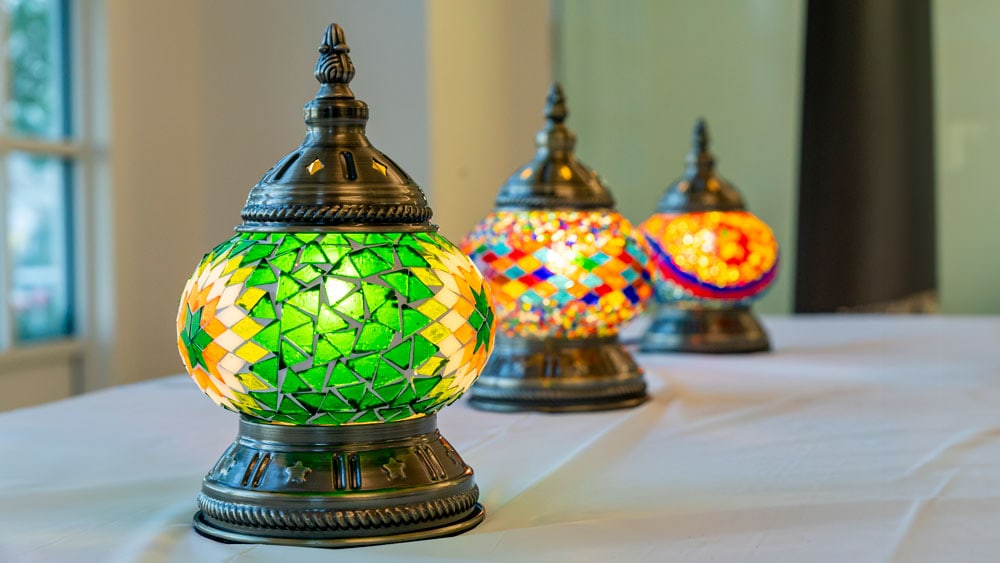
Picture the Grand Bazaar in Istanbul at dusk. Hundreds of glowing globes hang overhead, scattering jewel-toned light across centuries-old stone. At the heart of that scene sits the Turkish lamp, a handcrafted piece of functional art that has fascinated travelers, designers, and craft lovers for generations.
If you've ever wondered what a Turkish lamp actually is, how these glowing mosaics are made, or how you might create one yourself, you're in the right place. This guide walks you through everything: the history, the different styles, the traditional craftsmanship, and the step-by-step process of making your own at a mosaic lamp workshop or with a DIY kit at home.
Key Takeaways
- A Turkish lamp is a handcrafted mosaic light made from colorful glass pieces and beads arranged on a glass globe, with roots reaching back through Ottoman and Byzantine traditions.
- Each authentic Turkish mosaic lamp is assembled entirely by hand, so no two are ever identical.
- Popular styles include the Turkish table lamp, Turkish hanging lamps, and the Turkish floor lamp, each suited to a different space.
- Making your own lamp at a Turkish lamp making class takes about 2–3 hours and needs zero prior experience.
- The colors and patterns aren't random, each carries symbolic meaning rooted in Anatolian culture.
What Is a Turkish Lamp?
A Turkish lamp is a handcrafted lighting fixture built from small pieces of colored glass and beads, arranged into intricate mosaic patterns across a rounded glass globe. When the bulb inside is lit, the light passes through that colored glass and throws warm, kaleidoscopic patterns onto the surrounding walls and ceiling.
What makes a Turkish lamp so distinctive is that every single one is made by hand. An artisan cuts each piece of glass, places it individually on a clear glass base, and fills the gaps with beads and a special bonding paste. There's no factory mold, no mass production. That's exactly why a genuine Turkish mosaic lamp feels less like a household object and more like a small work of art, because it is one.
The Art Behind the Glow
The technique brings together several old artistic traditions at once. The colored glass is laid out in patterns that usually feature stars, blossoms, geometric shapes, and sweeping curves, motifs passed down through generations of Turkish craftspeople.
Then there's the metalwork. The base and crown of a Turkish lamp are typically shaped from brass or bronze, often hand-hammered and finished with traditional Ottoman detailing. The pairing of luminous glass with warm, sculpted metal is what gives these lamps their unmistakable character.
Why People Love Turkish Lamps
There are a few reasons the Turkish lamp has found fans all over the world. The most obvious one is atmosphere: flip the switch and an ordinary room turns intimate and a little magical, washed in color.
They're also remarkably adaptable. A single Turkish lamp looks at home in a sleek minimalist apartment, a layered bohemian living room, or a traditionally furnished study. That flexibility is why you'll spot them everywhere from cozy bedrooms to restaurants, spas, and boutique hotels trying to create a memorable mood.
And finally, there's the human element. In a world full of identical, machine-made things, owning, or better yet, making, something crafted entirely by hand carries a quiet kind of satisfaction.

The History of the Turkish Lamp
The story of the Turkish lamp reaches back thousands of years, linking ancient mosaic traditions to the living rooms of today.
Ancient Roots and Byzantine Influence
Mosaic art itself is ancient, dating back roughly 5,000 years, with some of the earliest decorative examples found across Anatolia. Early artisans used small pieces of colored stone and pebble to build patterns on floors and walls, a practice that slowly spread and grew more refined across the Mediterranean world.
The Byzantine Empire, ruled from Constantinople (today's Istanbul), pushed mosaic work to dazzling new heights. The shimmering golden mosaics inside the Hagia Sophia show just how sophisticated these craftspeople had become. That deep tradition of assembling tiny colored fragments into glowing images set the stage for what would eventually become the Turkish mosaic lamp.
Born in the Ottoman Era
When the Ottoman Empire rose to prominence, artisans began applying mosaic techniques to lighting. Early versions of the Turkish lamp illuminated sultans' palaces and the prayer halls of grand mosques across the empire.
This is the period when the lamp we recognize today truly took shape. Craftsmen perfected the rounded glass globe covered in colorful mosaic, paired it with ornate brass and bronze frames, and added hanging chains and decorative fittings. Brilliant stained glass, careful geometry, and skilled metalwork came together as a symbol of Ottoman elegance.
These lamps served a double purpose. In mosques, they created a calm, contemplative glow for prayer. In palaces, they signaled wealth and refined taste. The craft passed from master to apprentice, unbroken, for centuries.
Walk through the Grand Bazaar in Istanbul today and you'll find that tradition still very much alive, shop after shop glowing with Turkish mosaic lamps in every imaginable color, continuing a craft more than 500 years in the making.
How Are Turkish Lamps Made?
People are often surprised to learn just how much handwork goes into a single Turkish lamp. Understanding the traditional process makes you appreciate each finished piece that much more.
It begins with a plain, clear glass globe, the canvas. The artisan first decides on a pattern, often a classic Ottoman design built around a central star or floral motif. From there, the real work starts.
Each piece of stained glass is cut and trimmed by hand to fit its exact place in the design. The artisan applies a special adhesive to a small area of the globe, then sets the glass pieces down one at a time, building the pattern outward. Because the glass sits on a curved surface, every placement requires patience and a steady hand.
Once the main glass shapes are in position, the spaces between them are filled with tiny colored beads. These beads do two jobs at once: they lock the design together and they add texture that catches the light beautifully when the lamp is switched on. A bonding paste is then worked into the surface to hold everything firmly in place.
After the globe dries completely, it's cleaned and mounted onto its hand-finished brass or bronze base, wired, and fitted with a bulb. Only then is the Turkish mosaic lamp complete, usually after several hours of focused, careful craftsmanship.
This entirely handmade approach is the reason genuine Turkish lamps vary slightly from one to the next. Those little differences aren't flaws; they're the fingerprint of the person who made it.
Types of Turkish Lamps for Every Space
A Turkish lamp comes in several styles, each designed for a different spot in your home, or a different project to create at a Turkish mosaic lamp workshop.
Turkish Table Lamps
The Turkish table lamp is the most versatile option of all. Compact and self-contained, it features a single mosaic globe on a metal base, usually standing somewhere between 10 and 16 inches tall. That makes it perfect for nightstands, desks, side tables, or any surface that could use a little warmth and color.
Because of their intimate size, Turkish table lamps are wonderful as bedside nightlights or as accent pieces that bring evening atmosphere to a living room. They also make genuinely memorable gifts for housewarmings, weddings, and holidays.
Turkish Hanging Lamps and Chandeliers
When you want real drama, Turkish hanging lamps and chandeliers deliver. A single pendant looks striking over a kitchen island, in an entryway, or above a dining table. Multi-globe chandeliers, anywhere from three to twenty-five globes or more, become true centerpieces in larger rooms.
These suspended designs combine multiple handcrafted globes in different colors and patterns, hung from ornate brass frames. Lit up, they scatter color across an entire room. It's no wonder restaurants and boutique hotels lean on them to create an immersive, almost magical setting.
Turkish Floor Lamps
A Turkish floor lamp makes a bold statement while delivering real, functional light. These taller pieces often stack several mosaic globes vertically on a single stand, forming a glowing column anywhere from three to six feet high. They shine in corners, reading nooks, and any space that needs both illumination and a focal point.
Thanks to its size and presence, a Turkish floor lamp naturally anchors a room. It works especially well in living rooms, home offices, and quiet spaces designed for relaxation.
Turkish Mosaic Lamp Kits
If you'd rather create than simply buy, Turkish mosaic lamps DIY kits include everything you need to build an authentic lamp at home, pre-cut glass pieces, a glass globe, adhesive, beads, and clear instructions.
A Turkish lamp kit turns an ordinary afternoon into a creative project, and it's just as enjoyable solo as it is with friends or family.
Lamp Types Comparison
|
Lamp Type |
Best For |
Size Range |
Difficulty |
|
Table Lamp |
Bedrooms, desks, gifts |
10-16 inches |
Beginner-friendly |
|
Hanging Lamp |
Kitchens, dining areas |
6-12 inch globes |
Intermediate |
|
Floor Lamp |
Living rooms, corners |
3-6 feet tall |
Advanced |
|
Candle Holder |
Accents, small spaces |
3-5 inches |
Perfect for first-timers |
How to Make a Turkish Lamp
Creating your own Turkish lamp is a rewarding experience that connects you with centuries of artistic tradition. The good news? You don't need any artistic background to make something beautiful.
Materials You Need
A complete Turkish lamp kit includes:
• Glass globe: The clear base where you'll arrange your mosaic
• Colored glass pieces: Pre-cut squares, triangles, and shapes in various colors
• Glass beads: Small round beads that fill spaces between larger pieces
• Special adhesive: Slow-drying glue designed for glass-on-glass application
• Metal frame: The brass or bronze base and electrical components
• Design templates: Optional patterns to guide your arrangement
• Tools: Tweezers for precise placement
How to Make a Turkish Lamp (Step by Step)
Making your own Turkish lamp is far more achievable than most people expect. You don't need to be an artist, you just need a little patience and the willingness to enjoy the process. Here's exactly how it comes together, whether you're at one of our workshops or working through a kit at home. Start to finish, the hands-on part takes about two and a half hours.
Step 1: Choose your design. Pick your colors and pattern first. Lay out your glass pieces and beads on the design template so you can see the whole composition before anything is glued down.
Step 2: Apply adhesive to the globe. Spread glass adhesive over a small section of the globe at a time. Working in small areas keeps the glue workable and gives you room to place each piece precisely.
Step 3: Place your glass and beads. Set the colored glass pieces and beads down one by one, following your chosen pattern. This is the meditative heart of making a Turkish mosaic lamp, most people find themselves completely absorbed.
Step 4: Fill the gaps. Once your main pattern is set, fill the open spaces with smaller pieces and beads, checking that everything is firmly attached to the globe.
Step 5: Let it dry. Allow the adhesive and filling to dry completely. This curing step is essential before any further handling.
Step 6: Assemble the lamp. Attach the finished mosaic globe to the base and hardware to complete your lamp.
Step 7: Light it and enjoy. Switch it on and watch your handmade Turkish lamp transform the room into a glowing display of color, a functional work of art made entirely by you.
The easiest way to learn all of this in person is at a Turkish lamp making class, where an instructor guides you through every step and all the materials are provided.
What Do the Colors and Patterns Mean?
The designs on a Turkish lamp are never random. Each pattern and color carries meaning shaped by centuries of Anatolian tradition.
The Meaning Behind the Patterns
Geometric patterns dominate Turkish lamp design for both cultural and artistic reasons. These intricate, repeating shapes represent the infinite and the underlying order of the universe, a theme deeply woven into the region's artistic heritage.
Star motifs appear constantly, symbolizing protection, guidance, and light. Floral patterns, especially tulips and carnations, connect to Ottoman garden traditions and represent renewal and natural beauty. You'll also see eye-shaped motifs tied to the nazar, or evil-eye tradition, believed to protect the home from negativity.
What the Colors Represent
Color carries its own language in a Turkish lamp:
- Blue: The most beloved color, linked to protection, peace, and the nazar tradition that guards against the evil eye.
- Green: Represents paradise, prosperity, and growth, with special significance in the region's heritage.
- Red and Orange: Symbolize energy, passion, and warmth.
- White: Stands for purity and calm.
- Amber and Gold: Connected to wealth, sunlight, and illumination.
Most Turkish mosaic lamps blend several colors at once, creating the rich, jewel-toned glow these lamps are famous for.

How to Choose the Perfect Turkish Lamp
Picking the right Turkish lamp comes down to balancing how it looks with where it'll live.
Matching a Turkish Lamp to Your Decor
For modern, minimalist rooms: Choose simpler geometric patterns in a tighter color palette. White, amber, or single-tone blue designs complement clean lines without overwhelming them.
For bohemian or eclectic spaces: Go bold. Multi-colored lamps with complex patterns thrive here, and mixing a Turkish floor lamp with a couple of table lamps creates that wonderfully collected look.
For traditional interiors: Reach for classic Ottoman motifs in deep jewel tones, rich blue, ruby red, emerald green. Brass fixtures pair beautifully with wood furniture.
For coastal or Mediterranean themes: Lean into blue and white with touches of turquoise, echoing the Turkish coastline and the Aegean.
Where to Place Your Turkish Lamp
Part of the appeal of a Turkish lamp is how flexible it is:
- Entryways: A hanging lamp makes a striking first impression.
- Living rooms: Floor or table lamps add warmth to seating areas.
- Bedrooms: A table lamp on the nightstand gives soft, romantic light.
- Dining areas: Pendants or chandeliers above the table create an intimate setting.
- Bathrooms: A well-placed hanging lamp turns an ordinary bathroom into a spa-like retreat.
- Outdoor spaces: Covered patios and porches glow beautifully with Turkish lighting.
When you position your lamp, think about the surfaces around it, a Turkish mosaic lamp projects color onto nearby walls and ceilings, so those become part of the display too.
Where to Buy Turkish Lamps
If you're wondering where to buy a Turkish lamp, you generally have three good options, and the right one depends on what you're after.
Handcrafted directly from artisans. The most authentic lamps come from skilled makers who follow traditional techniques. Buying from a specialist who works in the genuine mosaic tradition, rather than a generic marketplace, means you get a real handmade piece rather than a mass-produced imitation.
A lamp you made yourself. Here's the option many people don't consider: the most meaningful Turkish lamp in your home can be the one you create with your own hands. A Turkish lamp kit lets you build an authentic mosaic lamp at home, and a workshop lets you do it with expert guidance. Nothing on a store shelf matches the connection you feel to a lamp you made yourself.
Local workshops and events. If you'd like to see and create the real thing in person, a Turkish lamp near me search often leads to hands-on workshops where you leave with a finished lamp the same day.
At Tiles Workshop, we offer both paths, ready-made and DIY kits you can enjoy at home, and in-person workshops across the United States where you craft your own. However you choose to bring one home, you'll be adding a piece of living tradition to your space.

Turkish Lamp Workshops Near You
Buying a finished Turkish lamp brings instant beauty to your home. But making one yourself? That gives you an experience and a memory that lasts far longer.
What to Expect at a Workshop
A Turkish mosaic lamp workshop usually runs 2–3 hours and welcomes total beginners. Here's how it typically unfolds:
Welcome and introduction. Your instructor shares the history and artistry of the Turkish lamp, walks you through the materials, and demonstrates the technique.
Design time. You choose your colors and plan your pattern, with the instructor offering guidance while leaving plenty of room for your own creativity.
Building your lamp. This is the main event, you assemble your lamp piece by piece, with help whenever you need it, in a relaxed and social setting.
Refreshments. Many workshops include authentic Turkish tea, coffee, and treats like baklava, turning the session into a small cultural journey.
Taking it home. You leave with a finished lamp you made yourself, a one-of-a-kind piece that exists nowhere else in the world.
Why Making Your Own Lamp Is Special
There's a particular satisfaction in creating functional art with your hands. In such a screen-heavy world, the simple act of arranging glass, feeling the materials, and watching a design slowly emerge is a refreshing kind of mindfulness.
The lamp you make tells your story, every color and pattern choice reflects you. And every time you switch it on at home, you'll remember the afternoon you spent making it.
A Turkish lamp making class also makes a fantastic group experience:
- Date nights: Create something together you'll keep for years.
- Birthday parties: A celebration your guests will actually remember.
- Bachelorette parties: Bond with your crew over personalized keepsakes.
- Team building: Connect with colleagues through shared creativity.
- Girls' night out: Quality time with an artistic twist.
Ready to make your own? Find a mosaic art class near you and book your spot today.
Frequently Asked Questions
What is a Turkish lamp?
A Turkish lamp is a handcrafted lighting fixture made from colorful glass mosaic pieces and beads arranged on a glass globe. With roots in Byzantine and Ottoman traditions, these lamps are known for their vibrant colors, intricate geometric patterns, and the warm, atmospheric glow they cast. Because each one is assembled entirely by hand, every lamp is unique.
How to make a Turkish lamp?
To make a Turkish lamp, you'll need a glass globe, colored glass pieces, beads, adhesive, and a metal frame. Plan your design first, then apply adhesive to small sections of the globe and place your glass pieces one at a time, working outward from the center. Fill the gaps with beads, let everything dry, then attach the globe to the base. The easiest way to learn is at a Turkish lamp making class with hands-on guidance.
How to make a Turkish mosaic lamp?
Making a Turkish mosaic lamp follows a traditional process: arrange your colored glass on a design template, apply adhesive to sections of the clear globe, and transfer your pieces carefully. Pack beads into the spaces between, allow time to dry completely, then clean the surface and attach it to the lamp base. No experience is required, beginners create beautiful lamps at workshops every day.
How are Turkish lamps made?
Turkish lamps are made entirely by hand. An artisan starts with a clear glass globe, cuts each piece of stained glass to fit, and applies them to the curved surface one at a time following a traditional pattern. The gaps are filled with colored beads and a bonding paste, and once dry, the globe is mounted onto a brass or bronze base. The whole process takes several hours of careful craftsmanship per lamp.
Where can I buy a Turkish lamp?
You can buy a Turkish lamp from specialist artisans, through authentic DIY kits you assemble at home, or by attending a local workshop where you make your own. For a genuine handmade piece, it's best to buy from a maker working in the real mosaic tradition rather than a generic retailer. Tiles Workshop offers both DIY kits and in-person workshops across the US.
What are Turkish lamps called?
A Turkish lamp goes by several names depending on its style, Turkish mosaic lamp, Ottoman lamp, or mosaic lantern. Hanging versions are sometimes called pendant lamps or Turkish lanterns, and multi-globe designs are known as Turkish chandeliers. In Turkish, they're often called "mozaik lamba" (mosaic lamp) or "Osmanlı lambası" (Ottoman lamp).
Where does the Turkish lamp originate from?
The Turkish lamp originates from Turkey, with artistic roots reaching back thousands of years into Anatolia. The craft developed during the Byzantine era and flourished under the Ottoman Empire, when these lamps lit palaces and mosques. Artisans in Istanbul and other Turkish cities continue the tradition today.
How long does it take to make a Turkish lamp?
The hands-on creation takes roughly 2–3 hours at a workshop. After that, the adhesive needs time, usually 12 to 24 hours, to dry fully before the lamp is ready to use. At a workshop, you complete the creative work during your session and either collect your lamp later or take it home to finish drying.
Can beginners make a Turkish lamp?
Absolutely. Turkish mosaic lamp workshops are designed for beginners with no artistic background. The process is intuitive and forgiving, you're arranging pre-cut glass rather than cutting it yourself, and small natural variations only add character. Most first-timers are genuinely amazed by what they create.

Bring the Magic of a Turkish Lamp Into Your Home
The Turkish lamp is centuries of artistic tradition transformed into something you can enjoy every single day. Whether you're drawn to the history, the colors, or the meditative craft of making your own, these handcrafted mosaics offer a bit of magic in a mass-produced world.
At Tiles Workshop, we keep this beautiful tradition alive through immersive Turkish mosaic lamp workshops across the United States. Our instructors guide you through the authentic process while you sip Turkish tea and create alongside fellow makers.
Ready to craft your own? Browse our upcoming workshop events, explore our DIY lamp kits for creating at home, or contact us to plan a private group event. Your journey into the glowing world of the Turkish lamp starts here.