Few design choices transform a home as quickly or as affordably as the right lamp in the right place. Lamp decorating is the art of using lamps not just to light a room, but to shape its mood, add personality, and tie a whole space together. Whether you're styling a cozy reading nook, refreshing a living room, or searching for a statement piece that doubles as art, the way you choose and place your lamps makes all the difference.
In this complete guide, we'll walk through everything you need to know: how to pick the right lamp for each room, where to position it, how to choose the perfect lampshade, and how to use decorative lamps as true design features. We'll also explore one of the most rewarding trends in home decor right now-creating your own handcrafted mosaic lamp at a Mosaic Lamp Workshop or with a DIY kit at home.
Key Takeaways
- Lamp decorating is about using lamps as both lighting and design elements, balancing function with style, scale, and placement.
- Layering light with several lamps (rather than relying on one overhead fixture) creates warmth and depth in any room.
- The right lampshade size, shape, and color can completely change how a lamp looks and how much light it gives.
- Decorative lamps, especially handcrafted mosaic glass lamps, work as statement pieces and conversation starters.
- You can personalize your space even further by making your own lamp with a Turkish Lamp Kit or DIY mosaic set.
What Is Lamp Decorating?
Lamp decorating is the practice of choosing, placing, and styling lamps to enhance both the lighting and the look of a room. It goes beyond simply switching on a light. Good lamp decorating considers the height and scale of each lamp, the shape and color of the shade, where the lamp sits, and how its glow interacts with everything around it.
Think of lamps as the jewelry of a room. A space can have beautiful furniture and a great paint color, but without thoughtful lighting it can still feel flat or cold. Lamps add warmth, draw the eye, fill awkward empty corners, and create the layered, lived-in feeling that makes a house feel like a home. That's why interior designers treat decorative lamps as essential styling tools, not afterthoughts.
The best part? Unlike a renovation or a furniture overhaul, decorating with lamps is flexible and forgiving. Swap a shade, move a lamp to a different room, or add a new statement piece, and you can shift the entire energy of a space, often in an afternoon.
Why Lamps Matter in Home Decor
Most homes rely on a mix of lighting types: overhead lighting, recessed lighting, task lighting, and ambient lighting. Overhead fixtures handle the practical job of brightening a room, but they often cast harsh, flat light. This is where decorative lamps earn their place.
Decorative lamps deliver softer, layered, ambient light that overhead fixtures simply can't match. A well-placed table lamp or floor lamp lowers the light to human level, creating pools of warmth that make a room feel intimate and inviting. When you walk into a space lit by a few lamps rather than a single ceiling light, you immediately feel the difference.
Lamps also do serious decorative work. A sculptural base becomes a focal point on a console table. A colorful mosaic glass lamp turns a plain shelf into a display. A pair of matching lamps brings symmetry and balance to a mantel or sideboard. And because lamps come in every style imaginable, modern, traditional, rustic, eclectic, they let you express your personality without committing to anything permanent.
In short, lamps are one of the rare home decor accessories that are both genuinely practical and beautifully decorative. That dual role is exactly why lamp decorating deserves real attention.

How to Choose the Right Lamp for Each Room
Before you think about placement or styling, you need the right lamp for the job. Different kinds of lamps suit different rooms and purposes, so let's break down the main lamp styles and where they shine.
Table Lamps
Table lamps are the workhorses of lamp decorating. Versatile and available in countless designs, they suit nightstands, desks, console tables, and side tables. For living rooms, beautiful table lamps for living room settings usually stand between 24 and 32 inches tall, scaled so the bottom of the shade sits around eye level when you're seated. Living room table lamps and sofa table lamps add warmth to seating areas and work beautifully in pairs on either side of a sofa. Decorative table lamps are a favorite for exactly this reason, a well-chosen pair of decorative lamps for living room spaces can instantly elevate the whole room.
Floor Lamps
Floor lamps deliver both height and function, making them ideal for corners, reading nooks, and spaces beside a chair or sofa. A floor lamp draws the eye upward and fills vertical space that table lamps can't reach. Decorative floor lamps can also serve as standalone sculptural pieces in an otherwise simple room, and the right decor lamps in a tall silhouette make a corner feel intentional rather than empty.
Accent and Decorative Lamps
Accent lamps are smaller, more decorative pieces designed to add character rather than serve as a primary light source. A small decorative night lamp on a bathroom counter, a glowing accent piece in a hallway, or a colorful mosaic lamp on a bookshelf all fall into this category. These are where you can have the most fun with color, texture, and artistry, small table lamp decor pieces and modern decor lamps let you experiment without committing to a major change.
Statement and Mosaic Lamps
When you want a lamp to be the star of the room, statement lamps step in. Handcrafted turkish mosaic lamps, with their jewel-toned glass and intricate patterns, are a perfect example, they function as both lighting and art. We'll return to these in detail later, because they've become one of the most exciting directions in modern lamp decorating.
When choosing any lamp, match its style to your room without going so far that it feels out of place. A lamp in a complementary style, but a different material like ceramic, brass, wood, or mosaic glass, adds interest and cohesiveness at the same time.
Here's a quick reference for matching lamp types to their ideal role and placement:
| Lamp Type | Best For | Light Type | Ideal Placement |
|---|---|---|---|
| Table Lamp | Everyday styling, pairs | Ambient + task | Nightstands, sofa tables, consoles |
| Floor Lamp | Height and corners | Ambient + reading | Beside seating, reading nooks |
| Accent / Night Lamp | Character and mood | Soft accent | Shelves, counters, hallways |
| Mosaic / Statement Lamp | Focal point and art | Decorative glow | Side tables, entryways, mantels |
Lamp Placement: Where to Put Lamps
Even the most beautiful lamp falls flat in the wrong spot. Smart lamp placement in living room layouts and beyond follows a few reliable principles.
Create a Triangle of Light
One of the golden rules of lamp decorating is to create a triangle of light. Instead of clustering all your lamps in one area, place three light sources around the room, for example, a table lamp on each side of the sofa and a floor lamp in a far corner. This distributes warmth evenly, eliminates dark corners, and gives the whole room a balanced glow. An odd number of lamps almost always looks better than an even, predictable arrangement.
Where to Put Lamps in Each Room
If you're wondering where to put lamps in living room spaces, aim for the spots where you actually spend time: beside seating, on console tables behind a sofa, and on shelves or sideboards that need a visual lift. In bedrooms, table lamps on nightstands provide soft, romantic light perfect for winding down. In entryways, a lamp on a console table offers a warm welcome. Kitchens benefit from a small accent lamp on the counter, and a lamp near a window looks especially inviting when seen from outside at night.
Mind the Scale
Always consider the size of the surface. A large lamp on a small table looks top-heavy, while a tiny lamp on a wide sideboard gets lost. On narrow surfaces like console or sofa tables, choose a slimmer base and avoid an oversized round shade that overhangs the edges.
The Complete Lampshade Guide
Nothing updates, or dates, a lamp faster than its shade. Mastering lampshades is one of the most powerful skills in lamp decorating.
Lampshade Size
Proportion is everything. As a rule of thumb, the height of the shade should be about a third of the total height of the lamp, and the width of the shade should be roughly twice the width of the lamp's base. The shade should always be wide enough to cover the lamp's hardware. Avoid the common mistake of a skinny, undersized shade, when in doubt, go a little bolder.
Lampshade Shape
Shade shape sets the tone. A drum or rectangular shade pairs well with geometric bases for a modern look, while a conical (empire) shape suits traditional bases like ginger jars or candlestick lamps. A simple drum shade reads contemporary and clean, which is why it's such a popular choice.
Lampshade Color and Material
Color controls how much light escapes. White and cream shades let maximum light through, ideal for reading lamps, while darker shades create a moody, intimate glow and direct light up and down rather than out. For warmth, a metallic lining inside a dark shade reflects light beautifully. Material matters too: looser weaves like linen and cotton feel casual and informal, while smooth silk or paper feels more formal. Woven and rattan shades add texture and warmth, perfect for a study or relaxed living space.
A Quick Word on Decorative Lamp Shades
Decorative lamp shades with trim, braid, pleats, or patterns can turn an ordinary lamp into a designer piece. Just remember the classic balance rule: a patterned base pairs best with a solid shade, while a simple, solid base can carry a bolder patterned shade.

Light Bulbs and Creating the Right Ambiance
The bulb you choose can make or break the mood, no matter how beautiful the lamp. Start by deciding what each lamp is for. Task lamps used for reading should be noticeably brighter than ambient accent lamps.
Next, consider color temperature. Lower temperatures produce a warm, yellow glow that feels cozy and welcoming, ideal for living rooms and bedrooms. Higher temperatures lean toward cool, blue-white daylight, better suited to work areas. (If you'd like the technical background, color temperature is measured in kelvins.) For most decorative lamp decorating, warm white bulbs create the inviting atmosphere people love.
Wattage matters as well. Accent lamps and bedroom lamps do well with lower wattage around 40 watts, while reading and task lamps benefit from 60 to 100 watts. Whenever possible, choose three-way bulbs or add a dimmer switch to accent lamps so you can adjust the mood. And keep your shade color in mind, a warm bulb behind a blue shade, for instance, can shift the color you actually see.
How Many Lamps and the Matching Question
A common question in lamp decorating is simply: how many lamps does a room need? The reliable answer is to think in odd numbers. Three lamps in a living room, arranged in that triangle of light, usually hits the sweet spot, illuminating corners without overwhelming the space.
Then there's the matching debate. Do your lamps need to match? Here's the simple guideline: lamps placed as a pair on a single surface, two nightstands, a buffet, or either end of a mantel, should match to create symmetry and balance. But lamps scattered across different areas of a room can absolutely differ. In fact, mixing lamp styles gives different corners their own personality and keeps a room from feeling like a showroom. Embrace variety where it makes sense, and reserve matching for true pairs.
Decorating with Statement and Decorative Lamps
Once you've mastered the fundamentals, decorative lamps become your chance to inject real artistry into a room. This is where lamp decorating turns from practical into personal.
Statement lamps work as focal points. Placed on a console table, a bookshelf, or a sideboard, a bold decorative lamp draws the eye and anchors the surrounding decor. The trick is to give it room to breathe, let a statement piece stand out rather than crowding it with competing objects.
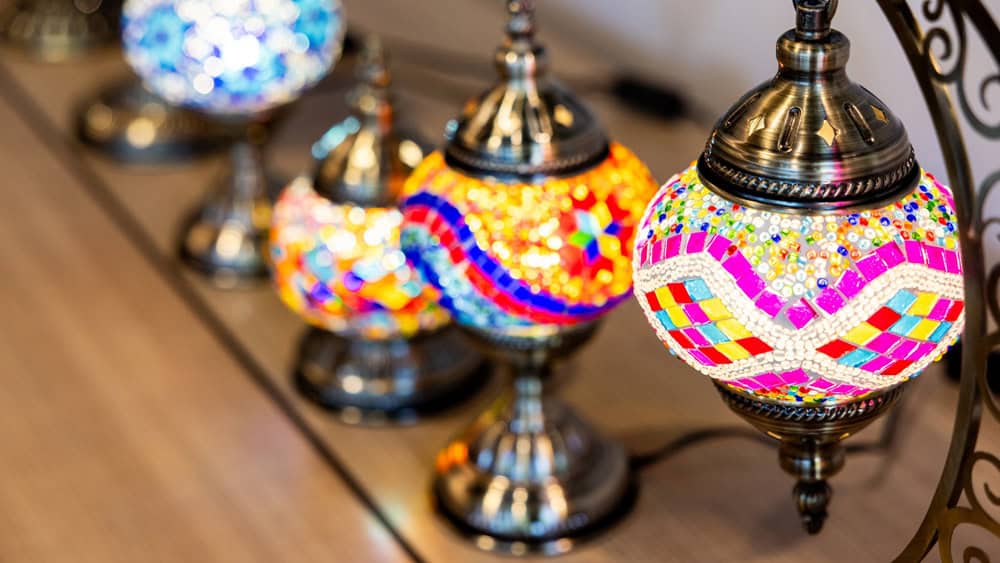
Among the most striking options are handcrafted mosaic lamps. A mosaic glass lamp is built from hundreds of small pieces of colored glass and beads, so when it's lit, it casts kaleidoscopic patterns of color across the walls and ceiling. The effect is unlike any mass-produced lamp, warm, immersive, and genuinely magical. These pieces draw on centuries of mosaic craftsmanship, and they bring an instant sense of artistry and culture to a space.
This is exactly why turkish mosaic lamps have become so popular for decorating living rooms, bedrooms, entryways, and even restaurants and boutique hotels. They serve as functional lighting and conversation-starting art at the same time. A single mosaic lamp on a side table can become the most memorable feature in the entire room. To see how this living tradition works and explore the styles available, you can browse a full collection of turkish mosaic lamps designed for the modern home.

Seasonal Lamp Decorating
One of the easiest ways to refresh your home throughout the year is to treat lamps as rotating accessories, much like throw pillows or seasonal wreaths. A simple swap signals a whole new season without any major redecorating.
For fall and winter, lean into warmth and depth. Lamps with rich bases, deep bronze, aged brass, dark ceramic, or warm wood, feel grounded and cozy. Pair them with shades in cream, taupe, or soft plaid textures to echo the layered comfort of the colder months. A glowing mosaic lamp in amber and red tones is especially beautiful during this season.
For spring and summer, lighten things up. Bases in white ceramic, pale rattan, woven seagrass, or soft pastels feel airy and fresh. Crisp white or natural linen shades keep everything bright. Coastal-inspired tones and floral details shine in the warmer months.
Holidays open up even more possibilities. A christmas decoration lamp in festive colors, or a mosaic lamp glowing in jewel tones, adds instant seasonal charm to a mantel or entryway. Because you don't have to redo an entire room, seasonal lamp decorating is one of the most cost-effective ways to keep your home feeling current and intentional all year long.
DIY Lamp Decorating: Make Your Own
Here's a side of lamp decorating that many people overlook: the most meaningful lamp in your home can be one you made yourself. DIY lamp decorating has surged in popularity, and it's easy to see why. A handmade piece carries a personal connection no store-bought lamp can match, and it lets you customize colors and patterns to fit your exact space.
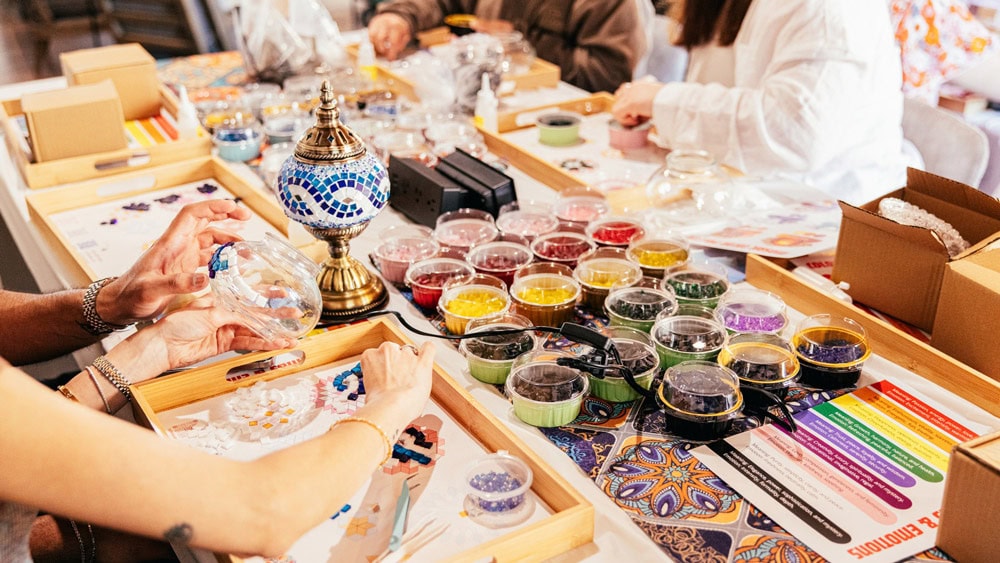
The most rewarding entry point is making a mosaic lamp. With a mosaic lamp kit, you get everything you need, pre-cut colored glass, beads, adhesive, a glass globe, and a base, along with step-by-step instructions. No prior experience is required, and the process itself is calming and almost meditative as you place each piece by hand.
There's a whole range of projects to choose from depending on your style and skill level:
- The Turkish Lamp Kit candle holder is the most beginner-friendly option, perfect for a first project or a relaxed craft night.
- The turkish mosaic lamp kit moon lamp creates a striking, modern silhouette.
- The turkish mosaic lighting table lamp kit produces a full-size statement piece for your living room or nightstand.
If you'd rather learn hands-on alongside others, an in-person Turkish Mosaic Lamp Workshop walks you through the entire process with expert guidance, an experience that's become a favorite for date nights, birthday parties, bachelorette parties, and team-building events. You can also explore the full range of turkish mosaic lamps DIY kits to create at home at your own pace.
Whether you build your own or attend a workshop, a handmade lamp becomes a decorating centerpiece with a story behind it, and that story is part of what makes the piece so special.
How to Decorate a Lampshade
If you already own lamps you love but want to refresh them, learning how to decorate lamp shades is a quick, budget-friendly project. A new or updated shade can completely transform an existing lamp, and a few simple ideas go a long way.
There are several easy approaches. You can wrap a plain shade in fabric or wallpaper for a custom pattern, add trim, braid, ribbon, fringe, or tassels, around the top and bottom edges for a more polished, classic look, or use paint and stencils to create a one-of-a-kind design. If you want to know how to decorate a glass lamp shade specifically, frosted glass paint or adhesive films let you add color and texture while still letting light through.
A few quick tips: always measure carefully before cutting any material, use a shade adhesive designed for the job, and test your light bulb behind the finished shade to make sure the look holds up when illuminated. Even a simple swap, from a dark conical shade to a fresh white drum shade, can modernize an older lamp instantly.
If you'd like to take customization even further, making a fully handcrafted mosaic lamp gives you total control over color and pattern from the ground up, turning a basic light into a personalized work of art.
Frequently Asked Questions
How do you use lamps in home decor?
Use lamps to layer light and add personality. Combine several lamps at different heights, table lamps, floor lamps, and accent lamps, to create a warm triangle of light rather than relying on one overhead fixture. Treat decorative lamps as styling pieces on console tables, shelves, and nightstands, and choose styles and colors that complement your room while adding visual interest.
How many lamps should a room have?
Most rooms look best with an odd number of light sources, and three is the sweet spot for a typical living room. Arranging three lamps in a triangle around the room distributes light evenly and eliminates dark corners. Larger rooms may need more, but odd numbers almost always feel more natural than even ones.
Do all the lamps in a room need to match?
No. Lamps used as a pair on a single surface, two nightstands or either end of a buffet, should match for symmetry. But lamps placed in different areas of a room can and often should differ, giving each corner its own personality. Mixing styles keeps a room from feeling like a showroom.
How tall should a table lamp be?
For living rooms and side tables, most table lamps should stand between 24 and 32 inches tall, sized so the bottom of the shade sits around eye level when you're seated. The lamp should suit the scale of its surface, not so large it overwhelms the table, nor so small it gets lost.
How do you decorate a lamp shade?
You can decorate a lamp shade by wrapping it in fabric or wallpaper, adding trim like ribbon or fringe around the edges, or using paint and stencils for a custom design. For glass shades, frosted glass paint or adhesive film adds color while still letting light through. Always measure carefully and test the look with the bulb on.
How do you make a decorative lamp at home?
The easiest way to make a decorative lamp at home is with a mosaic lamp kit, which includes pre-cut glass, beads, adhesive, a glass globe, and a base. You plan a design, apply the glass pieces to the globe, fill the gaps with beads, let it dry, then assemble the lamp. No experience is needed, and the result is a one-of-a-kind handcrafted piece.
What are decorative lamps used for?
Decorative lamps serve two purposes at once: they provide soft, ambient lighting and act as design features. Beyond brightening a space, they add warmth, fill empty corners, create focal points, and express personal style. Statement pieces like mosaic glass lamps work as functional art that elevates the whole room.
Where should you place lamps in a living room?
Place lamps where you spend time and where light is needed: beside seating, on console tables behind the sofa, and on shelves or sideboards that need a lift. Aim for a triangle of light using three sources spread around the room, and scale each lamp to the surface it sits on.
Are decorative table lamps good for a living room?
Yes. Decorative table lamps are one of the most effective tools for styling a living room. They layer warm, ambient light at eye level, add personality to side tables and consoles, and work beautifully in pairs for symmetry. Living room decorative lamps, from sleek modern decor lamps to colorful mosaic glass pieces, let you shift a room's mood and style without any major redecorating.
Bring Your Space to Life with Thoughtful Lamp Decorating
At its heart, lamp decorating is one of the simplest and most rewarding ways to transform a home. With the right lamps, smart placement, well-chosen shades, and a little creativity, you can shift the entire mood of a room, adding warmth, personality, and that inviting glow that makes a space feel truly yours. From layering light with a triangle of table and floor lamps to choosing a handcrafted mosaic piece as your focal point, every choice you make brings your home a little more to life.
And if you're ready to add a truly personal touch, consider creating your own piece of functional art. Explore our turkish mosaic lamps DIY kits to craft a lamp at home, book a hands-on Turkish Mosaic Lamp Workshop, or reach out through our Mosaic Art Classes Near Me page to plan a private group event. To learn more about who we are and the tradition we keep alive, visit Tiles Workshop. However you choose to light your space, the perfect lamp is waiting to become the heart of your room.